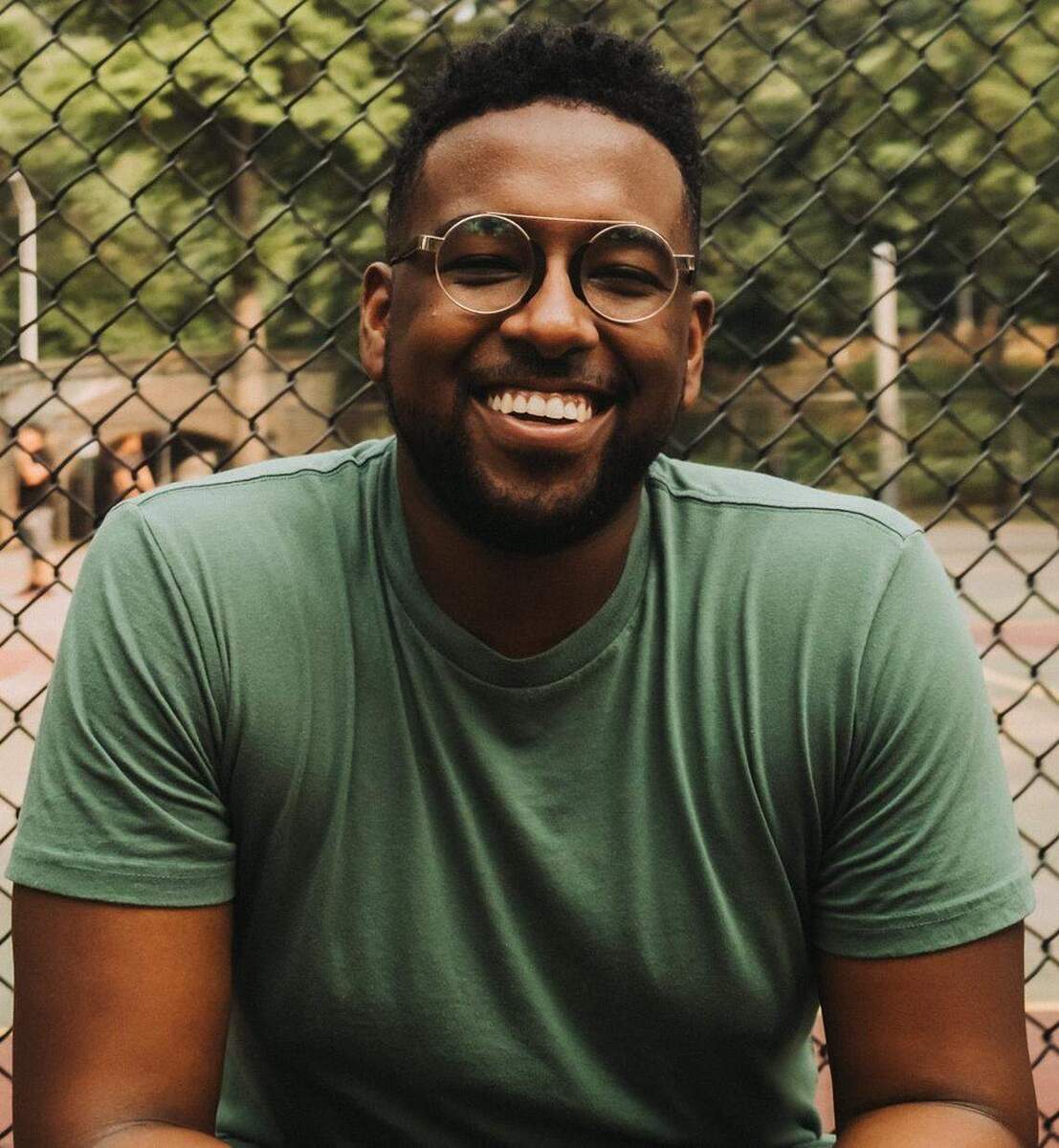
One day after ICE’s bloody and shameful siege of Minneapolis claimed the life of Alex Pretti — a VA hospital nurse shot by border agents while pinned to the ground while multiple people watched and while they also recorded the entire scuffle in HD, adding yet another snuff film to the Trump administration’s IMDB — I came across two members of the hometown basketball team, who each, in their own way, discussed the value of prayer. One was from Anthony Edwards, star of the Minnesota Timberwolves, and, arguably, face of the NBA, pressed for his views in the locker room postgame after a Sunday game against the Golden State Warriors already delayed a day as a direct result of Pretti’s killing.
“Man I just love Minnesota, all the love and support they show me, so I’m behind them. I’m behind whatever they with,” Edwards said to the press scrum. “I don’t really have social media so I’m not in tune with everything. I’ve heard about the stuff going on.” He finished his thoughts by letting fans know that “me and my family are definitely praying for everyone.”
“Thoughts and prayers” and its variants often convey a casual dismissal of tragedy laced with the wound of a slur. I wasn’t surprised to find most fans online were unsatisfied with Edwards’ answer. Those I saw who offered a mild defense of Edwards stressed the difficulty of catching your breath to dissect a 36-point beat down in a postgame scrum, let alone an ethnic cleansing. Or, they cautioned against having a “We Got Ja Rule On The Phone” moment by keeping your expectations of moneyed celebrities low.
Neither explanation sat right with me. I don’t believe Ant’s fans wanted him to renegotiate the Department of Homeland Security budget, but for their favorite player to show he was just as angry about children in his city being snatched from their mothers. Other stars like Victor Wembanyama offered words I found more provocative and proximate to the mood of the moment, despite being thousands of miles away from Edwards’ backyard.
If Edwards’ off the cuff soundbites were parsed unfairly, he did himself no favors when, hours after he insisted he was relatively unaware of what was happening because he doesn’t “really have social media,” Ant tweeted a promo for his business ventures. A soon-to-be centimillionaire almost certainly has a team running social. But it’s still his name on that post. I understand wanting more from your neighbor, right now, something beyond dropping 30 a night.
Which brings me to Ant’s teammate, of sorts. Matt Moberg, the Wolves team’s chaplain since 2019, received viral attention for a statement posted on January 7 — a few weeks before Edwards’ remarks — that at face value, appeared to offer a radically different approach to prayer. The activist and clergyman whose job is, quite literally, to pray for everyone, shared his raw frustrations with the people who share his religion uttering empty incantations. The whole poem is worth sitting with, but a few of my favorite bars:

Courtesy of Matthew Moberg
If you’re a church posting
prayers for peace and unity today
while my city bleeds in the street,
miss me with that softness you only wear when it costs you nothing.
…
There is a kind of peace that only exists
because it refuses to tell the truth.
That peace is a lie.
And lies don’t grow anything worth saving.
Fighting words. Again, Moberg posted his statement weeks before Pretti’s shooting and Edwards’ response. I cannot emphasize enough: Ant’s chaplain wasn't sliming him on Instagram. But, despite frequently wrestling on the page with what we can and should expect from athletes, I admit to reflexively juxtaposing Edwards and Moberg’s two apparently contradictory attitudes toward prayer.
But rather than just fire of tweets, I reached out to Moberg to see how he felt. I learned how, despite directly living in the tension of exhorting celebrities to live their values, he avoids demanding they prove his virtues. In the best of ways, listening to Ant’s pastor wrestle made me doubt, or at least reflect on my beliefs.
I appreciate that Moberg spent time with me, in between his activism and ministry, to speak candidly for my first real-deal eyeblack newsletter!
We had a wide ranging conversation, discussing:
Why Moberg empathized with Edwards and his Wolves teammates.
The situation on the ground in Minneapolis since agents killed Pretti (and Border Patrol chief Greg Bovino was Col. Lockjaw-ed1 out of his role).
Being the white guy asked to lead Black locker rooms2
If he thinks NBA teams, particularly the Wolves, suppress outspoken players like Wemby.
The value, if any, of athletes speaking out.
Maintaining his friendship with Karl-Anthony Towns even after his trade to the New York Knicks.
Our conversation was edited for clarity and length. It was also cut short by Moberg receiving an urgent call from his mother: ICE agents were threatening to arrest her. So we hung up abruptly and I remembered to pray. For everybody.
eyeblack: So, what’s going on in Minneapolis? What would you like people on the outside to understand?
Matt Moberg: There are so many, daily transgressions that I don't think get picked up. It's not just like the deaths of Renee [Good] or Alex [Pretti], it's just the way [immigration agents] treat people, and the arrogant immunity they attach to themselves. They're crossing so many daily lines. I’ve been out there every time with Jamar Clark, Philando [Castile], George Floyd, Amir Locke, all of it. I've seen the Minneapolis Police Department, which has always been like they've always crossed lines. I've caught the tear gas and the rubber bullets in the past. But what we’re seeing right now is a step wildly beyond MPD. After Pretti’s killing and after Bovino and [Kristi] Noem went on the record immediately and said he's a violent terrorist, I was so livid. I could feel, like, the Martin Luther King non-violence leave me and Malcolm X take his place. I actually am genuinely surprised that there wasn't a violent backlash.
Why do you think Minneapolis hasn’t, for the most part, violently fought back?
One second, sorry. An ICE agent is doing an intimidating walk by right now.
[Moberg pauses while the agent strolls by his car.]
There's honestly a lot of momentum built into our resistance that has been solid and strong and consistent. Nobody wants to trifle with that. When we had George Floyd we had a lot of riots in response that disrupted our city. A lot of it was because there's so much ignorance about the systemic inequalities and inequities that were already present before Floyd that people have been calling attention to for years prior. This time, I think there was a sense that there needs to be a collective way to get the attention of the whole city, come what may, so we can actually put a stop to this. You’re seeing the media reporting differentiate what the federal government is saying from what we actually know and what we’re seeing with our own eyes.
You’ve also said that you’ve dealt with ICE head-on.
/
The first week I met with community organizers in downtown Minneapolis, I had an ICE agent that came around all of us, take a photo of me next to my Hyundai Santa Fe, and go, we'll be seeing you. Next week, I’m on the highway and this vehicle with Texas plates, blacked out windows and face masks on the drivers. They started honking their horn. Then, once they moved in front of me, tapped the brakes at like 65-70 mph.
My understanding is that a lot of chaplains in roles like yours tend to be more doctrinally conservative, and I would imagine, politically conservative. Is this true?
Yes, and not to belittle others who are in these roles, but I don't have a position to protect, I don't have a church to defend. I don't have some theological camp to protect. I can show up as authentically and as real as I can without, needing to shore up every question with a perfect silver bullet answer or make sure every doubt is eradicated.
Apologies for what is probably an obvious remark, but: you are white.
Yes, I am. [chuckles] And the locker room is Black.
How do you pursue your work without communicating like the stereotypical white guy telling a bunch of Black kids how to act?
I'm very aware of the social settings from which I'm speaking, and are very aware of what's attached to that, especially not just the big scale of, like, what it means to be white in America, but what it means to be white in Minneapolis. I'm not coming in on a high horse with a cape on my back, going, like, take your pen and paper out and jot these notes down. It helps that they know that I'm an artist here in the Twin Cities. I’m not hoping that at the end of this conversation they come to my church. I'm allowed to be more transparent and real than I would imagine some others may be.
Has the changing political environment from being post George Floyd, in the thick of MAGA 2.0, and now the ICE raids, changed your work and approach?
I remember being at the Fourth Precinct after George Floyd, when we're having all kinds of chaos unfold like a war zone. I called Karl-Anthony Towns and Naz Reid and was like, like, Bro, we're gonna have a press conference tomorrow downtown. You need to be there. Over the years, I realized we need authentic presence and not cameos that people step into. It’s not fair of me to ask an athlete to be, like, some spokesperson for the moment at hand. It's hard for me to tell the players that who they are is more important than what they do and then all of a sudden go, “I need you to be a puppet and recite these different lines and make sure it lands well, because that's people need right now.” Also, I think with Floyd, it was so racialized, and this locker room is Black men close to the issue of police violence, including from those on the outside who wanted these visible Black men to respond. So, it hit so much closer to home for them. There was a lot more fear [around Floyd] that I can't fully understand, but I felt and I heard and I tried to hold the best of my limited abilities with the fellas than what we have right now. That doesn’t mean they shouldn’t care or don’t care about issues beyond Floyd or Philando Castile. It’s just different from the ICE metro surge that we're currently dealing with.
A lot of observers, including Wolves fans, criticized Anthony Edwards’ response to the ICE raids for seeming detached and ignorant.
I don't think that's a fair ask to get him in the moment, usually post game, to give some kind of polished answer. I understand, and I can empathize with people who would want more of a response from our team3. But we love Anthony Edwards because of who Ant is. Like, there's not like he's giving some polished PR or abiding by anyone's set of rules, and he doesn't do that in this dismissive way. He's a joy filled man, like, his joy is loud. I think it's a really unfair ask to all of a sudden go, like, What are your thoughts on the immigration policies as they currently stand the United States of America, and how they're manifesting in these violent confrontations with ICE? I agree that we should be saying more collectively. But, and maybe I'm cynical when it comes to national discourse as a whole, but we're not one Anthony Edwards hot take away from breaking this thing open.
Do you believe the Wolves support players who do want to speak?
Our organization, holistically, has been good at telling the players, We want to support you guys. Nobody is putting the mute button on players. Nobody's saying “You can say this, but you can't say that.” I think it’s more like, We're in your corner, however you need us.
That specific concern arose because the same week, Victor Wembanyama was very critical of ICE, but suggested his media relations department discouraged him from speaking out.
Victor is a wonderful man. And I appreciate what he said.4 But, if his PR says no, it doesn't mean he can't say it. Like the power in the organization is with the players. Ultimately PR can chime in with whatever they want, but the players decide where they want to express their convictions.
[Moberg pauses for a few seconds.]
Sorry. The National Guard and some ICE agents just passed by me. I have a lot of empathy for these guys, which I think can make it more complicated these moments too. I don't care what they say or don't say because it isn’t a reflection on the weight that they carry. Today, somebody texted my wife about something I said. So I can imagine the fear from an NBA star on a bigger scale. Players are told when they walk in the Target Center that they’re not just, like, a point guard on the Minnesota Timberwolves, but you're, in and of yourself, a brand and business, and should know where the major financial partners are sitting around on the courtside seats. I can understand a player thinking, Will the guys signing my checks hate me if I say anything that might be slightly inclined towards an act of resistance against the Empire at hand?
How do you help athletes express their values without feeling compelled to perform them?
I don’t want them to start from a place of fear, but of acceptance and love and work from there instead of seeking opportunities to make a name for themselves. Especially Minneapolis, we've seen so many talking heads that have come through that have let us down in the past. It might be uplifting to have a spokesperson come through and say a good word for the people, but to see them like, turn on that word a year later.
Can you share an example of a player you’ve seen mature in this way?
Karl [Anthony] Towns comes to mind. His personality is so beautiful and big and it’s misunderstood by a lot of folks who dog him for things that aren’t warranted. But he has shifted in his life from needing approval, or a grand round of applause everywhere he goes, to being, like, I am who I am. Those insecurities might pop up here and there still. But what he did on the ground when the cameras weren't looking, connecting with different organizations, showing up for different people. He called my kid on his birthday just because he knew he was my kid’s favorite player. When everything about the industry would say you better care for you and yours only I've watched him and benefited from him learning how to love beyond his own concerns.
How do you hope pro athletes ultimately process what’s happening in Minneapolis?
My hope for the athlete community would be the same one that I hope for all of us. I want people pausing, just to be sad. I want athletes to be people who recognize these slain people are not some name of some new movement that is shifting the culture. It’s very easy to get enraged and reactive and I'm not diminishing that at all. I think it's warranted. But like, man, there's a good man who died on our streets. Within 10 miles from where I am right now you can go to George Floyd Square. You can see Renée Good’s vigil, then walk to Alex Pretti’s vigil. Within this range, my kids went to Annunciation School, where two kids were killed by somebody with a gun. The pain is not going to be easily documented in an article or a documentary or a headline. Lives are forever being detoured. There are people that were with us, that are no longer here, and that should devastate us all.
eyeblack is free! Making this newsletter is not. If you enjoyed this article, please partner with my pursuit of independent, distinctive, and fearless sports reporting by signing up for a paid subscription.
1 Maybe he’ll get a nice, comfy desk job?
2 Matt emphasized how important his co-chaplain, Chris Thibodeau is as a partner in their work
3 On Thursday, one day after our interview, Wolves players warmed up in black tees with white text that read STAND WITH MINNESOTA, released a statement on behalf of the players through the team’s social media channels, and fundraised for local organizations. I am grateful for every penny donated to organizations benefitting the community. Still, the shirt and statement are vague in what they are standing for or against and why they need to stand because it does not name the people or institutions that forced them to take a stand.
4 Wemby’s response fascinated me. Not only did he appear to suggest the Spurs media relations staff discouraged him from speaking forcefully against ICE, he explicitly explained that being an immigrant (he’s from France) made him nervous about elaborating any further about his anger about what he called a “murder.” For me, Wemby’s fear only amplified his courage.

