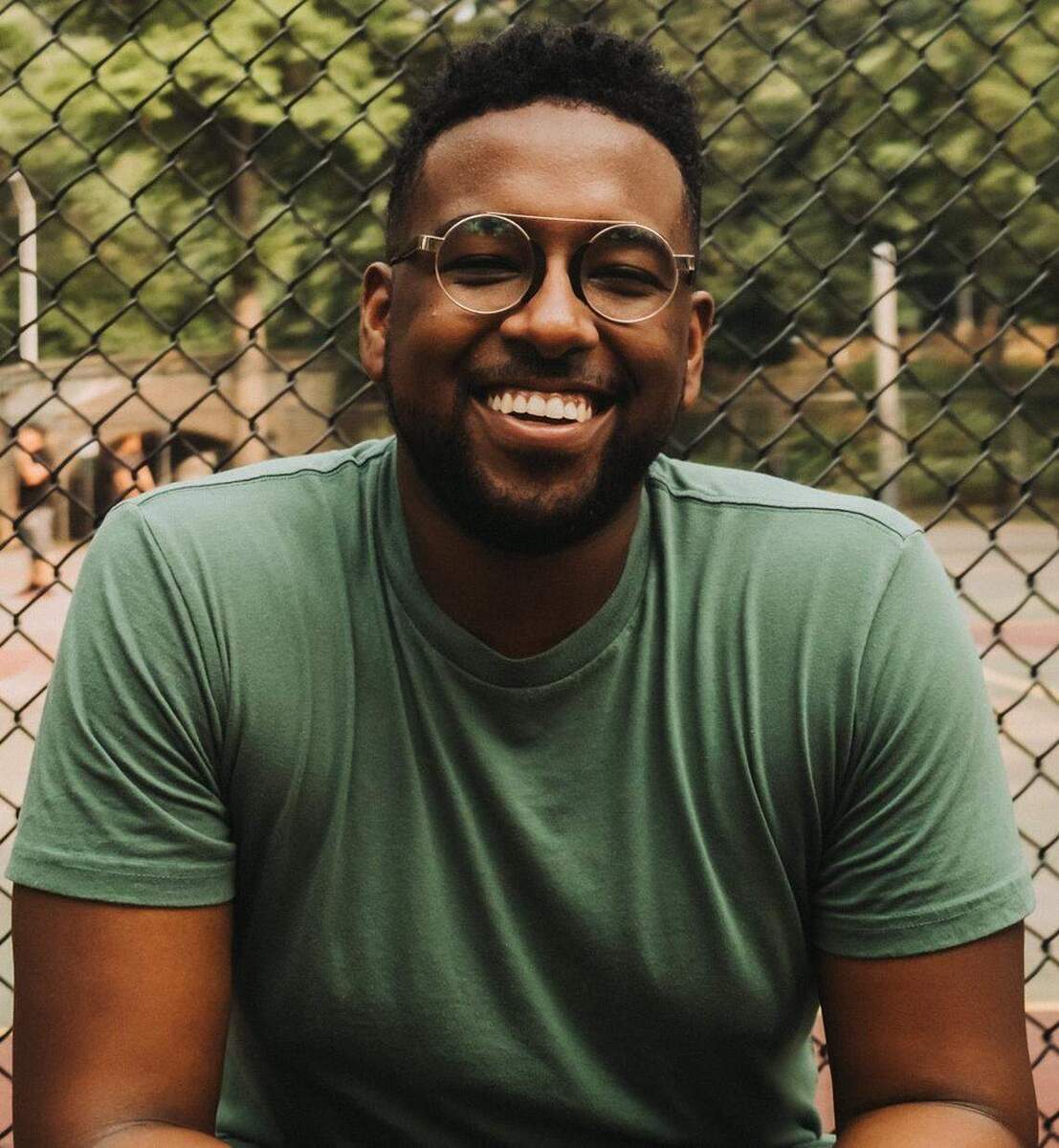

Before Twitter was cultivated into a watering hole for Nazis to monetize their smear campaigns against Somalians, it was a place where you got to meet cool people. One of those cool people I met was a college kid named Pat Ellington Jr., who had a vested interest in exploring the stories of Black people in baseball.
So did I! But not like Pat.
The Morehouse undergrad would, unlike anybody I knew, discuss Black American stars like Mookie Betts, Hunter Greene, and Derek Jeter in the same breath as Latin players Ronald Acuña Jr., Luis Severino, and Roberto Clemente. While if you were to look at any of these players without knowing their Spanish-sounding names, I suspect most would see them as Black. But because they are foreign born, from Spanish speaking countries, they are frequently categorized into a completely discreet class of their own. When people, self-included, lamented the decline of great Black starting pitchers — especially the rarity of those likely to reach the statistical 20-win milestone, Ellington would push back on any analysis that risked excluding Hall of Famers like Pedro Martínez and Luis Tiant because they were born in countries with accents, tildes, and God-tier mofongo.
Ellington wouldn’t accept the binaries forming between Black American descendants of slaves and those who could trace their roots across the Caribbean, South America and beyond. I soon learned that through his blogging and reporting, on MLB.com, and most distinctly, from his Red Black Green Baseball newsletter, that he had been actively developing journalism and analysis of Black baseball from a global framework. And through his work, developed a rigorous and expansive understanding of Black history that radically reinterpreted of the Black presence in Major League Baseball today. Ellington’s work invokes the same feeling in me that Bad Bunny did through his Super Bowl halftime show, where he connected Puerto Rican, Latinidad, and U.S. history, showing our shared history on plantations. 1
Who but Ellington would maintain a database of every Black minor league baseball player alongside their nationality and ethnic background that he updates regularly?
Your favorite beat writer could never. Your least favorite baseball writer would never. Which is why I knew I had to ask Ellington about the lane he’s carved for eyeblack.

screenshot of Pat Ellington Jr’s Red Black Green Baseball Blog
Ellington told me about the baseball stars who drew him to deeper study of the Black diaspora, the pushback he receives— even from other Black baseball fans, and why viewing baseball from a global lens enriches what we know of ourselves.
eyeblack: How did you first start to consider non American manifestations of Blackness in baseball?
Pat Ellington, Jr: You remember when Ronald Acuña, Jr. and Ozzie Albies came up together with the Atlanta Braves, and the bromance they had? Or Francisco Lindor and Jose Ramirez in Cleveland? It kind of just made a light bulb flick off of my head. And mind you, I was at a prominent HBCU [Morehouse] where I was not just front of African American people. I was surrounded by some of the best and the brightest from all over Africa and the diaspora. There’s some history there too: during the 1890s and early 1900s Booker T Washington and Mary McCloud Bethune put together programs where they hand picked Afro Cuban students to attend Bethune-Cookman University and Tuskegee Institute. There’s a chance that the Cuban players who have been playing today had great grandparents, great great, great great grandparents, uncles, cousins, etc, who might have gone to an HBCU. Watching the Black Latino players like Luis Robert who kneeled with African American players when George Floyd died, that really opened my eyes even more. There’s also the fact that you have people like Hall of Famers Rod Carew, Fergie Jenkins or current players like Tristan McKenzie, who are of Afro Caribbean descent. And of course, the autobiographies of Felipe Alou and Luis Tiant discussing what it meant to be Black and Latino in America. All these complex identities were being flattened, and hardly anyone I could find was putting these connections together.

Ozzie Albies and Ronald Acuña Jr.
You know, I was regularly at MLB games in the press box during that George Floyd era, and I drew almost the opposite conclusion about Latinos in baseball. Which may have just been my ignorance, straight up. But, I didn’t see many foreign born Latin participation in the George Floyd uprising. I’d see the American born Afro-Latinos like Giancarlo Stanton kneel, or I’d chat with Dellin Betances at an event for The Players Alliance. What were you observing about the immigrant Latin-born Black community?
I was also informed by my interactions and interviews with Black Latino players in the minor leagues. There’s Josue De Paula. Sean Ross, who's an Afro-Puerto Rican catcher in the Pirates system, or George Valera. They were really adamant and casual about claiming their Blackness, on record. You also got to look at the history too. There's an actual history of Latin Americans who were proudly Black, and it's pretty much just been overshadowed and stamped out.
What Afro-Latino histories do you believe we’re overlooking?
We could spend our entire time talking about Roberto Clemente and how he should be in the echelon of Black activist athletes with Muhammad Ali, Pele, and Kareem Abdul-Jabbar. Clemente’s not included in that collective by the sports community even though he should be. If anyone knew anything on Clemente, they would know how personally insulted he would be by that being wiped away from this detached from his legacy. It's not like these guys get enlightened to the fact that they're Black when they come to America. Some of these people come from historically Black areas of Latin America that have a rich culture in their in itself.
One of my favorite recurring interests in your writing is your approach to discovering Black enclaves in Latin America that Americans are unlikely to know about. What provokes that research?
For me, it really starts with the personalities of some of these Latin players. There was an MLB pitcher named Fernando Rodney who is from the Dominican Republic and used to pretend to shoot an arrow into the sky whenever he successfully closed a game. That drew me to him. And if you ever listen to his interviews, he speaks perfect English. I learned that he’s from a Dominican enclave of English speaking people of African American descent. As I started reading, I learned that community clung to their identity for hundreds of years, in a country that went from being very pro-Black because of their Haitian roots, into becoming very anti-Black once it became part of the Dominican Republic. I learned that Rodney’s province was the wealthiest province in entire Dominican Republic until the 1930s or 40s, because it was the Dominican Republic's only port, and that wealth and ingenuity allowed his community to fund their schools and maintain themselves. They withstood hundreds of years of God-knows-what, and still have their culture, Black church hymns.